
Banu Mushtaq’s rise to global recognition did not happen overnight. Her journey began in Hassan, a quiet town in Karnataka, where she grew up listening to the unspoken stories of women around her. These early voices of mothers, daughters, neighbours, workers slowly shaped her understanding of society. They became the foundation of the writer she would one day become.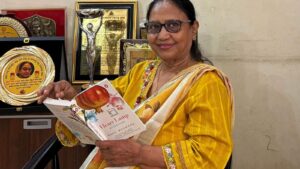
Banu went to a Kannada-medium school, and while many around her believed English was the only path to success, she held on to her mother tongue with pride. She later worked as a journalist with Lankesh Patrike, where she was exposed to harsh social realities, discrimination, and the struggles of marginalized communities. This experience sharpened her political and emotional understanding of the world. But journalism is not that enough path for her to express her deep thoughts. She wanted to tell deeper, true emotional stories so she turned fully to writing.
Her early work did not get instant fame. She published in small magazines, read at local events, and faced the constant doubt that regional writers often carry. Still, she wrote on daily basis short stories, essays, poems, and even a novel. Her writing was shaped by the Bandaya movement, which challenged inequality and injustice. She also became a strong voice against gender discrimination, often facing threats and criticism for speaking openly about women’s rights and Muslim women’s struggles.
Everything changed in 2025. Her Kannada short-story collection “Heart Lamp”, translated by Deepa Bhasthi, won the International Booker Prize—making her the first Kannada author to earn this global honour. It was also the first time a short-story collection had ever won the prize. The world finally discovered the depth, honesty, and courage of her storytelling.
Banu Mushtaq’s journey is not just a writer’s success story. It is a celebration of regional language literature, women’s voices, and the power of truth told quietly, but fearlessly.